Executive Summary
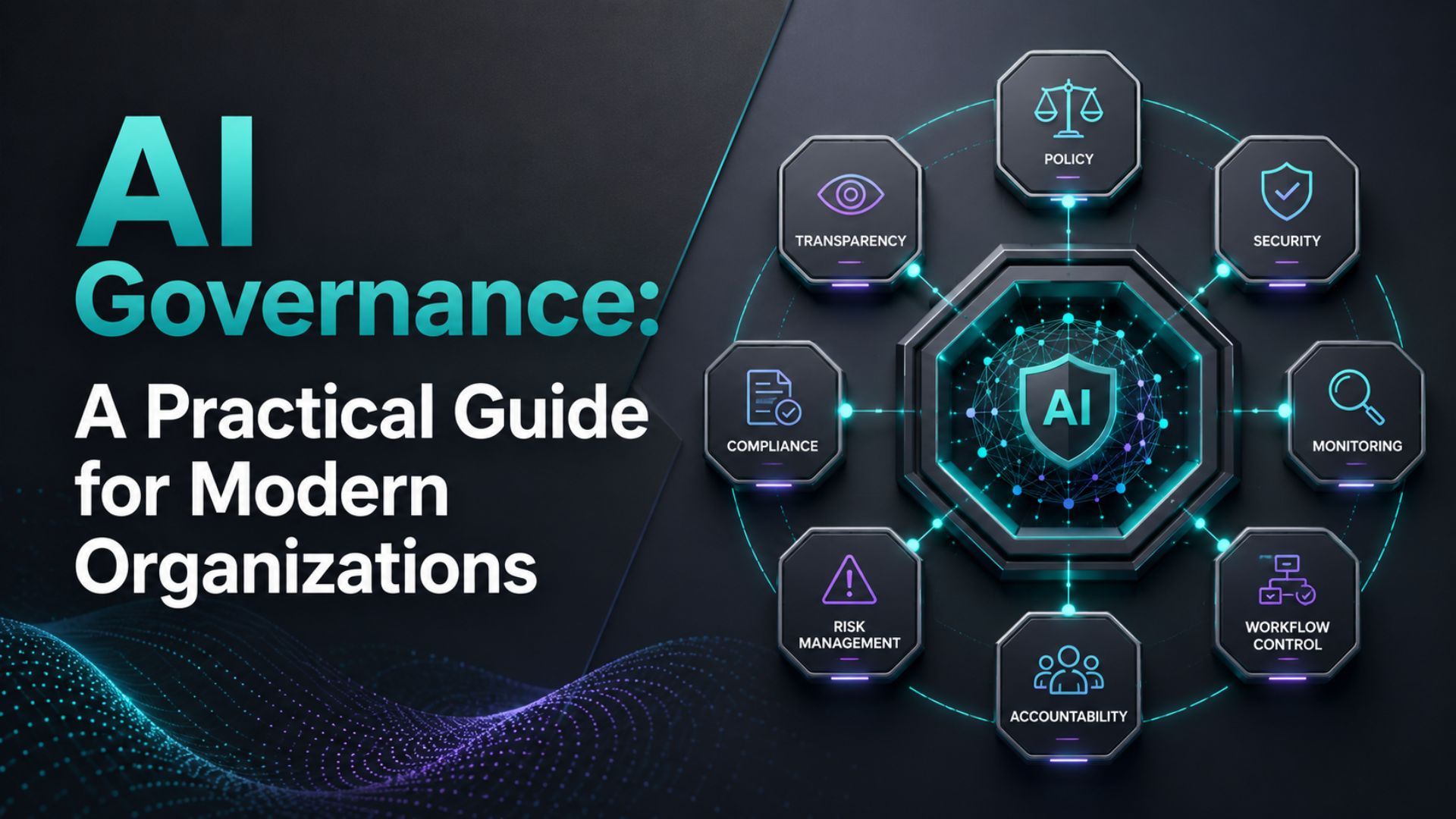
Artificial intelligence has rapidly become the most consequential governance blind spot in Indian enterprise boardrooms, demanding structured accountability frameworks that go far beyond IT policy. Praxis Consulting examines how forward-looking organizations are embedding AI governance within their broader GRC architecture—aligned to ISO 42001, SEBI mandates, and emerging global standards—to transform AI risk from a liability into a strategic differentiator.
<p><strong>Executive Summary:</strong> As AI systems proliferate across Indian enterprises—from credit decisioning in NBFCs to predictive maintenance in manufacturing to automated compliance monitoring in regulated industries—boards and senior leadership are confronting a governance vacuum of significant proportions. Unlike traditional technology risks, AI introduces opacity, emergent behaviour, and accountability ambiguity that conventional GRC frameworks were never designed to address. The convergence of ISO 42001 (the international standard for AI Management Systems), SEBI's intensified board oversight mandates, and the operational demands of the DPDP Act has created both the urgency and the regulatory scaffolding for enterprises to build dedicated, board-ready AI governance frameworks. This article provides a structured roadmap for GRC leaders and C-suite executives seeking to close this gap decisively in 2026 and beyond.</p>
<h2>The Governance Vacuum at the Heart of Enterprise AI</h2>
<p>A striking finding from Praxis Consulting's advisory engagements in 2026 is that a majority of Indian enterprises deploying AI systems in production environments lack even a basic inventory of those systems—let alone documented accountability structures, bias audits, or model risk policies. This is not a technology failure; it is a governance failure.</p>
<p>The speed of AI adoption has consistently outpaced institutional readiness. Business units procure AI-powered SaaS tools, data science teams deploy predictive models, and vendors embed algorithmic decision-making into standard enterprise software—all largely invisible to the board, the Chief Risk Officer, and the compliance function. The result is an expanding portfolio of consequential decisions being made by systems that no single accountable individual fully understands or oversees.</p>
<p>This opacity carries concrete regulatory risk. Under the <strong>Digital Personal Data Protection (DPDP) Act, 2023</strong>, automated processing of personal data—particularly where it produces decisions that affect individuals—triggers obligations around consent, transparency, and grievance redressal. SEBI's corporate governance circulars increasingly expect boards to demonstrate active oversight of technology risks, including algorithmic systems used in market operations, client onboarding, and risk assessment. The Ministry of Corporate Affairs (MCA) is closely watching global developments in mandatory AI disclosure, and Indian regulatory convergence with the EU AI Act's risk-classification principles is widely anticipated within the next 24 to 36 months.</p>
<p>The governance vacuum is not merely a compliance problem. It is a strategic vulnerability. Enterprises that cannot explain how their AI systems make decisions—to regulators, customers, investors, or courts—face reputational, legal, and operational exposure that dwarfs the efficiency gains those systems were deployed to deliver.</p>
<h2>ISO 42001: The Structural Foundation for AI Governance</h2>
<p>Published in December 2023 and now gaining significant adoption momentum among Indian enterprises in 2026, <strong>ISO/IEC 42001</strong> provides the most mature and internationally recognised framework for establishing an AI Management System (AIMS). Structured analogously to ISO 27001 for information security and ISO 9001 for quality, ISO 42001 offers a Plan-Do-Check-Act architecture that integrates naturally into existing GRC and management system landscapes.</p>
<p>The standard's core contributions to AI governance include:</p>
<ul> <li><strong>AI System Inventory and Classification:</strong> ISO 42001 requires organisations to identify and document all AI systems in scope, classify them by intended use and risk level, and maintain an up-to-date register. For most Indian enterprises, this inventory exercise alone surfaces significant governance gaps.</li> <li><strong>Impact Assessment Obligations:</strong> The standard mandates AI impact assessments—analogous to Data Protection Impact Assessments under the DPDP Act—for systems whose outputs affect individuals, business processes, or regulatory compliance. These assessments must be documented, reviewed, and updated as systems evolve.</li> <li><strong>Accountability and Role Definition:</strong> ISO 42001 requires explicit assignment of accountability for each AI system, from development through deployment and decommissioning. This directly addresses the diffuse accountability that characterises most enterprise AI environments today.</li> <li><strong>Supplier and Third-Party AI Governance:</strong> Given that a substantial proportion of enterprise AI is embedded in third-party platforms and SaaS tools, the standard extends governance obligations to the supply chain—requiring due diligence on AI providers' own governance practices.</li> <li><strong>Continual Monitoring and Performance Evaluation:</strong> ISO 42001 aligns with the broader GRC shift toward continuous control monitoring, requiring ongoing evaluation of AI system performance, fairness, and alignment with intended objectives.</li> </ul>
<p>Critically, ISO 42001 is designed for interoperability. Enterprises that have already invested in ISO 27001, ISO 9001, or integrated GRC platforms will find that an AIMS can be layered onto existing management system infrastructure with substantially lower implementation overhead than a greenfield deployment. Praxis Consulting's implementation experience confirms that organisations with mature ISO 27001 programmes can typically achieve ISO 42001 alignment within six to nine months with focused effort.</p>
<h2>Embedding AI Governance Within the Enterprise GRC Architecture</h2>
<p>The most consequential strategic decision organisations face in 2026 is whether to treat AI governance as a standalone initiative or as an integrated discipline within the broader GRC framework. The evidence strongly favours integration. Siloed AI governance programmes—often housed exclusively within IT or data science functions—consistently fail to achieve the board visibility, cross-functional accountability, and regulatory defensibility that the current environment demands.</p>
<p>Effective integration requires deliberate architectural choices across four dimensions:</p>
<p><strong>1. Risk Taxonomy Expansion:</strong> Enterprise risk taxonomies must be updated to include AI-specific risk categories: model risk, algorithmic bias risk, explainability risk, AI supply chain risk, and AI-enabled regulatory risk. These categories should be mapped to existing enterprise risk registers and assigned ownership at the senior leadership level. The Chief Risk Officer, in collaboration with the Chief Data Officer or Chief AI Officer where those roles exist, should own the consolidated AI risk profile.</p>
<p><strong>2. Policy and Control Framework:</strong> Organisations require a dedicated AI governance policy—endorsed at board level—that establishes minimum standards for AI system development, procurement, deployment, monitoring, and retirement. This policy should reference ISO 42001 requirements, DPDP Act obligations for automated processing, and any sector-specific regulatory guidance (RBI's model risk management guidelines for banks and NBFCs are particularly relevant). Control objectives derived from this policy should be operationalised within the GRC platform, with automated evidence collection and continuous monitoring where feasible.</p>
<p><strong>3. Board Reporting and KRI Design:</strong> Boards cannot govern what they cannot see. AI governance must be surfaced in board reporting through purpose-designed Key Risk Indicators: the number of high-risk AI systems in production, the proportion with completed impact assessments, model performance drift metrics, bias audit findings, and open regulatory observations. These KRIs should feed into the real-time risk dashboards that SEBI and RBI now expect boards to actively engage with—not receive as quarterly summaries.</p>
<p><strong>4. Three Lines of Defence Application:</strong> The classical three-lines model applies directly to AI governance. The first line—business units and AI development teams—owns day-to-day compliance with the AI governance policy and is responsible for impact assessments and model documentation. The second line—risk and compliance functions—provides oversight, challenge, and policy interpretation. The third line—internal audit—conducts periodic independent assurance over the AI governance framework's design and operating effectiveness. External assurance, increasingly expected by regulators and institutional investors, provides the final layer of credibility.</p>
<h2>The DPDP Act Dimension: AI Governance and Data Privacy Convergence</h2>
<p>For Indian enterprises, AI governance and data privacy governance are not parallel workstreams—they are deeply intertwined, and organisations that manage them separately are creating unnecessary complexity and regulatory exposure. The DPDP Act's requirements for lawful processing, purpose limitation, data minimisation, and individual rights directly constrain how AI systems can be designed, trained, and deployed.</p>
<p>Several AI governance obligations under ISO 42001 map directly to DPDP Act requirements. AI impact assessments must incorporate data protection considerations, particularly for systems processing sensitive personal data categories. Consent management architectures—which Indian organisations are now operationalising under the DPDP Act—must account for AI-driven processing, including profiling and automated decision-making. Breach response workflows must be extended to cover AI system failures that result in unauthorised data exposure or discriminatory outcomes.</p>
<p>The Data Protection Board of India, once fully constituted and operational, is expected to take a close interest in algorithmic accountability—particularly in sectors such as financial services, healthcare, and employment where AI-driven decisions carry significant individual impact. Enterprises that have proactively integrated AI governance with their DPDP compliance architecture will be substantially better positioned to demonstrate regulatory good faith in enforcement proceedings.</p>
<p>Practically, this convergence means that the personal data mapping exercises organisations are conducting for DPDP compliance should explicitly tag data flows that feed AI systems. Data Protection Impact Assessments should be harmonised with AI impact assessments under ISO 42001, reducing duplication and ensuring that both regulatory and governance requirements are addressed in a single, coherent process.</p>
<h2>Building Board-Ready AI Governance: A Phased Implementation Roadmap</h2>
<p>For GRC leaders tasked with operationalising AI governance in 2026, the challenge is as much about sequencing and stakeholder management as it is about technical design. Praxis Consulting recommends a phased approach that delivers tangible governance value at each stage while building toward comprehensive ISO 42001 alignment.</p>
<p><strong>Phase 1 — Discover and Classify (Months 1-3):</strong> Conduct a structured AI system inventory across all business units, including third-party and embedded AI. Classify each system using a risk-tiering methodology aligned to ISO 42001 Annex A and the EU AI Act's risk categories (anticipating future regulatory convergence). Identify the top ten high-risk systems requiring immediate governance attention. This phase should produce a board-presentable AI risk landscape—often the first time leadership has seen the full scope of AI deployment within the enterprise.</p>
<p><strong>Phase 2 — Policy and Accountability Architecture (Months 3-6):</strong> Develop and secure board endorsement of the AI governance policy. Assign accountable owners to all classified AI systems. Conduct impact assessments for high-risk systems. Establish the AI governance committee or working group with cross-functional representation from risk, legal, compliance, technology, and business leadership. Define the KRI set for board reporting.</p>
<p><strong>Phase 3 — Control Operationalisation and Platform Integration (Months 6-9):</strong> Embed AI governance controls within the enterprise GRC platform, enabling automated evidence collection and continuous monitoring. Integrate AI KRIs into the live risk dashboard. Extend third-party due diligence processes to cover AI supplier governance. Conduct the first cycle of internal audit review over the AI governance framework.</p>
<p><strong>Phase 4 — Assurance and Certification (Months 9-18):</strong> Pursue ISO 42001 certification through an accredited third-party certification body, providing external validation of the AIMS and a credible signal to regulators, customers, and investors. Establish a continuous improvement cycle aligned with the management system's annual review cadence.</p>
<p>Organisations that complete this roadmap will have transformed AI from an ungoverned liability into a demonstrably managed enterprise capability—one that boards can speak to with confidence, regulators can audit with transparency, and stakeholders can trust with evidence.</p>
<p>As Indian enterprises navigate an increasingly complex intersection of AI proliferation, regulatory intensification, and stakeholder scrutiny, the window for reactive governance is closing. The organisations that invest in structured, integrated AI governance frameworks today will not only reduce their regulatory and reputational exposure—they will build the institutional credibility and operational resilience that defines sustainable competitive advantage in the AI era. Praxis Consulting's Risk and Governance Advisory practice works with boards, CROs, and compliance leaders across sectors to design, implement, and assure AI governance frameworks that are rigorous, proportionate, and built for the long term. We invite senior leaders who are ready to move from AI governance aspiration to execution to connect with our team for a structured diagnostic and implementation engagement.</p>
Actionable Recommendations
Commission an enterprise-wide AI system inventory as an immediate priority, classifying all in-production systems by risk tier using ISO 42001 and EU AI Act criteria—this single action will surface the governance gaps that require urgent board attention and regulatory defensibility.
Integrate AI governance formally within the enterprise GRC framework by expanding the risk taxonomy, assigning C-suite accountability for AI risk, and embedding AI-specific Key Risk Indicators into the live board risk dashboard to meet SEBI's active oversight expectations.
Harmonise AI impact assessments with DPDP Act Data Protection Impact Assessments to eliminate duplication, ensure regulatory coherence, and create a single, audit-ready record of how personal data flows through AI systems across the enterprise.
Initiate an ISO 42001 gap assessment—particularly if the organisation holds ISO 27001 or ISO 9001 certification—to leverage existing management system infrastructure and establish a realistic 12-to-18-month roadmap toward formal AI Management System certification and third-party assurance.

Founder & Principal Consultant at Praxis Consulting with 30+ years of expertise in GRC, Enterprise Risk Management, and International Management Standards. A published author of Mastering ISO 17025, School Safety Blueprint, and ISO 19011:2026 — Auditing Excellence, he has trained over 5,000 professionals worldwide.