
Executive Summary
Traditional vendor risk management frameworks are inadequate for today's interconnected business ecosystem where suppliers have become critical infrastructure. Organizations must evolve from transactional vendor oversight to strategic enterprise dependency risk management that encompasses continuous monitoring, scenario-based resilience testing, and integrated governance structures.
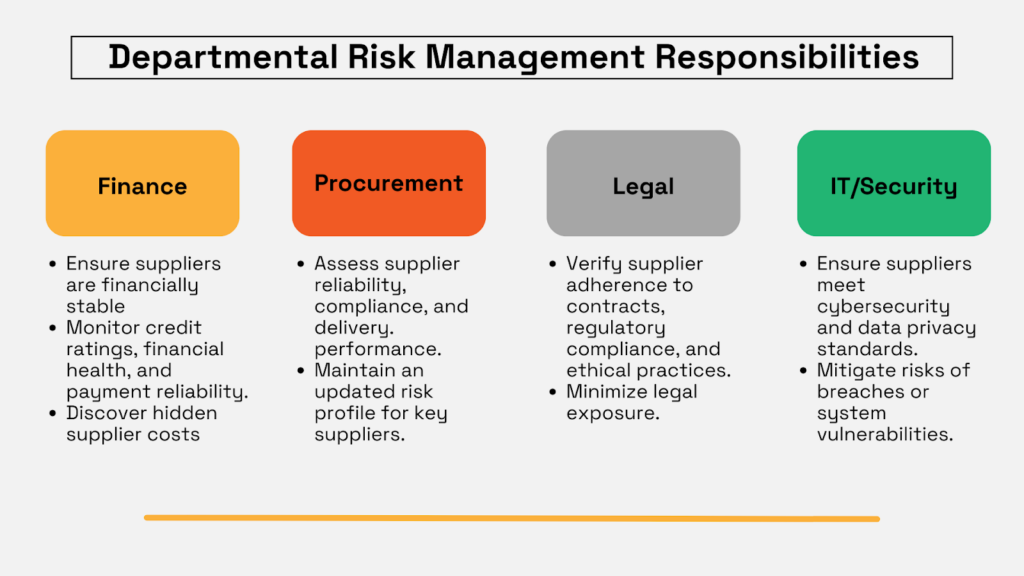
<p><strong>Executive Summary:</strong> The paradigm of vendor risk management has fundamentally shifted in 2024, as organizations recognize that many suppliers have transcended traditional vendor relationships to become critical enterprise dependencies. This evolution demands a comprehensive reimagining of risk governance frameworks, moving beyond compliance-driven assessments to strategic dependency risk management. Indian enterprises, particularly those with global operations, must adopt sophisticated approaches that integrate continuous monitoring, scenario-based resilience testing, and cross-functional governance structures to manage enterprise dependency risk effectively. The convergence of AI-powered risk platforms, regulatory expectations under frameworks like the Digital Personal Data Protection Act 2023, and increasing supply chain vulnerabilities necessitates immediate action from C-suite leaders to transform their risk management capabilities.</p><h2>The Evolution from Vendor Risk to Enterprise Dependency Risk</h2><p>The traditional vendor risk management model, characterized by annual assessments and procurement-led oversight, has become obsolete in today's interconnected business environment. Enterprise dependency risk represents a fundamental shift in how organizations conceptualize and manage their critical supplier relationships. Unlike conventional vendor management, which focuses primarily on contractual compliance and financial stability, enterprise dependency risk encompasses the strategic, operational, and systemic risks arising from deep organizational interdependencies.</p><p>Indian enterprises are particularly vulnerable to this evolution, with recent industry surveys indicating significant increases in supplier-related business disruptions. The Reserve Bank of India's guidelines on outsourcing of IT services by banks and the Securities and Exchange Board of India's regulations on technology service providers exemplify the regulatory recognition of this shift, emphasizing continuous monitoring and risk-based oversight rather than periodic assessments.</p><p>Enterprise dependency risk manifests across multiple dimensions: operational dependencies where suppliers control critical business processes, technological dependencies involving cloud services and software platforms, data dependencies where third parties manage sensitive information, and strategic dependencies where suppliers influence competitive positioning. The COVID-19 pandemic and subsequent geopolitical tensions have demonstrated that these dependencies can create cascading risks that threaten organizational survival.</p><p>Organizations must recognize that enterprise dependency risk extends beyond traditional risk categories. It encompasses concentration risk, where over-reliance on single suppliers creates vulnerability; substitution risk, where alternative suppliers cannot be readily identified or onboarded; and systemic risk, where supplier failures can trigger broader market disruptions. The interconnected nature of modern business ecosystems means that a single critical supplier failure can impact multiple business lines, customer relationships, and regulatory obligations simultaneously.</p><h2>Key Dimensions of Enterprise Dependency Risk</h2><p>Understanding enterprise dependency risk requires a comprehensive analysis of four critical dimensions that distinguish it from traditional vendor risk management approaches. These dimensions form the foundation for developing effective risk governance frameworks that address the complexity of modern supplier relationships.</p><p><strong>Operational Criticality:</strong> This dimension evaluates the extent to which suppliers control or influence core business processes. Unlike traditional vendors who provide discrete products or services, enterprise dependencies often manage end-to-end processes that directly impact customer experience and business outcomes. For example, a financial services company relying on a third-party payment processor faces operational dependency risk because any service disruption immediately affects customer transactions and regulatory compliance.</p><p><strong>Technological Integration:</strong> Modern enterprises increasingly depend on suppliers for critical technology infrastructure, including cloud computing, software-as-a-service platforms, and cybersecurity solutions. This technological integration creates deep dependencies that extend beyond contractual relationships to encompass data flows, system architectures, and operational workflows. The failure of a critical technology supplier can paralyze business operations and expose organizations to significant cyber risks.</p><p><strong>Data and Information Dependencies:</strong> The proliferation of data-driven business models has created new forms of supplier dependency related to data processing, analytics, and information management. Under regulations like the Digital Personal Data Protection Act 2023, organizations remain accountable for data protection even when processing is outsourced to third parties. This creates complex dependency relationships where suppliers' data handling practices directly impact the organization's regulatory compliance and reputation.</p><p><strong>Strategic and Competitive Dependencies:</strong> Some suppliers become so integral to an organization's competitive strategy that their performance directly influences market position and strategic outcomes. These dependencies often develop gradually as organizations increase their reliance on specialized suppliers for innovation, market access, or competitive differentiation. The loss of such strategic dependencies can fundamentally alter an organization's competitive landscape.</p><h2>Regulatory Landscape and Compliance Implications</h2><p>The regulatory environment surrounding enterprise dependency risk has evolved significantly, with new frameworks emphasizing continuous oversight and proactive risk management. Indian organizations must navigate a complex regulatory landscape that includes sector-specific guidelines and cross-cutting data protection requirements.</p><p>The Reserve Bank of India's Master Direction on Outsourcing of Information Technology Services requires banks to maintain comprehensive vendor risk management frameworks that include continuous monitoring, regular audits, and contingency planning. Similarly, the Insurance Regulatory and Development Authority of India has issued guidelines on outsourcing of activities by Indian insurers that emphasize risk-based oversight and governance structures.</p><p>The Digital Personal Data Protection Act 2023 introduces additional complexity by establishing data fiduciary obligations that extend to data processors and third-party service providers. Organizations must ensure that their enterprise dependencies comply with data protection requirements and maintain appropriate technical and organizational measures to protect personal data.</p><p>International regulations also impact Indian enterprises with global operations. The European Union's Digital Operational Resilience Act (DORA) requires financial entities to manage ICT third-party risk through comprehensive oversight frameworks. Similarly, the United States' proposed cybersecurity regulations emphasize supply chain risk management and third-party oversight.</p><h2>Framework for Enterprise Dependency Risk Management</h2><p>Effective enterprise dependency risk management requires a structured framework that integrates risk identification, assessment, monitoring, and mitigation activities. This framework must be tailored to the organization's specific risk profile and regulatory requirements while maintaining flexibility to adapt to changing business conditions.</p><p><strong>Risk Identification and Classification:</strong> The first step involves identifying all enterprise dependencies and classifying them based on criticality, substitutability, and potential impact. Organizations should develop dependency mapping exercises that trace critical business processes to their underlying supplier relationships. This mapping should consider both direct suppliers and sub-suppliers that could impact business operations.</p><p><strong>Continuous Risk Assessment:</strong> Traditional annual risk assessments are insufficient for managing enterprise dependency risk. Organizations must implement continuous assessment processes that monitor supplier performance, financial stability, cybersecurity posture, and regulatory compliance in real-time. This requires investment in risk monitoring technologies and data analytics capabilities.</p><p><strong>Scenario-Based Resilience Testing:</strong> Enterprise dependency risk management must include regular resilience testing that evaluates the organization's ability to maintain operations during supplier disruptions. These tests should consider various scenarios, including supplier failure, cyberattacks, natural disasters, and geopolitical events. The results should inform contingency planning and supplier diversification strategies.</p><p><strong>Integrated Governance Structure:</strong> Managing enterprise dependency risk requires coordination across multiple organizational functions, including procurement, risk management, information technology, legal, and business operations. Organizations should establish integrated governance structures that facilitate cross-functional collaboration and ensure consistent risk management approaches.</p><h2>Technology and Innovation in Dependency Risk Management</h2><p>Advanced technologies are transforming how organizations identify, assess, and manage enterprise dependency risk. Artificial intelligence, machine learning, and data analytics enable more sophisticated risk monitoring and prediction capabilities that were previously unavailable.</p><p>AI-powered risk platforms can analyze vast amounts of data from multiple sources to identify emerging risks and predict potential supplier disruptions. These platforms can monitor news feeds, financial markets, social media, and other data sources to provide early warning signals about supplier-related risks. Machine learning algorithms can identify patterns and correlations that human analysts might miss, enabling more proactive risk management.</p><p>Blockchain technology offers potential solutions for supply chain transparency and traceability, enabling organizations to better understand their extended supplier networks and identify hidden dependencies. Smart contracts can automate certain risk management processes and ensure consistent application of risk controls across supplier relationships.</p><p>Digital risk management platforms integrate various risk management functions into unified systems that provide real-time visibility into enterprise dependency risk. These platforms can automate risk assessments, generate risk reports, and facilitate collaboration among risk management stakeholders.</p><h2>Building Organizational Capabilities</h2><p>Successful enterprise dependency risk management requires significant organizational capabilities that extend beyond traditional risk management skills. Organizations must invest in developing these capabilities to effectively manage the complexity of modern supplier relationships.</p><p><strong>Risk Analytics and Data Science:</strong> Organizations need advanced analytics capabilities to process and analyze the large volumes of data generated by continuous risk monitoring activities. This requires investment in data science skills and analytical tools that can identify patterns, predict risks, and support decision-making.</p><p><strong>Cross-Functional Collaboration:</strong> Enterprise dependency risk management requires close collaboration among various organizational functions. Organizations must develop collaboration mechanisms and governance structures that facilitate information sharing and coordinated decision-making across functional boundaries.</p><p><strong>Supplier Relationship Management:</strong> Managing enterprise dependencies requires sophisticated supplier relationship management capabilities that go beyond traditional procurement functions. Organizations must develop capabilities for strategic supplier engagement, performance management, and collaborative risk mitigation.</p><p><strong>Crisis Management and Business Continuity:</strong> Organizations must enhance their crisis management and business continuity capabilities to respond effectively to supplier disruptions. This includes developing detailed contingency plans, alternative supplier arrangements, and rapid response procedures.</p><h2>Future Trends and Strategic Considerations</h2><p>The landscape of enterprise dependency risk continues to evolve, driven by technological advancement, regulatory changes, and shifting business models. Organizations must anticipate these trends and adapt their risk management approaches accordingly.</p><p>The increasing adoption of artificial intelligence and automation in business processes is creating new forms of dependency risk related to algorithmic decision-making and automated systems. Organizations must develop capabilities to assess and manage risks associated with AI-powered suppliers and automated business processes.</p><p>Geopolitical tensions and trade disputes are creating new categories of dependency risk related to cross-border supplier relationships. Organizations must consider geopolitical factors in their supplier selection and risk management decisions, particularly for critical technology and data processing services.</p><p>The growing focus on environmental, social, and governance (ESG) factors is expanding the scope of enterprise dependency risk to include sustainability and social responsibility considerations. Organizations must evaluate suppliers' ESG performance and ensure alignment with their own sustainability commitments.</p><p>Regulatory expectations continue to evolve, with increasing emphasis on proactive risk management and continuous oversight. Organizations must stay abreast of regulatory developments and adapt their risk management frameworks accordingly.</p><h2>Conclusion</h2><p>Enterprise dependency risk represents a fundamental evolution in how organizations must approach supplier relationships and risk management. The traditional vendor risk management model, focused on periodic assessments and compliance verification, is inadequate for managing the complex dependencies that characterize modern business ecosystems.</p><p>Organizations must develop comprehensive enterprise dependency risk management capabilities that integrate continuous monitoring, scenario-based resilience testing, and cross-functional governance structures. This transformation requires significant investment in technology, organizational capabilities, and governance frameworks, but it is essential for managing the risks and opportunities of an interconnected business environment.</p><p>Indian enterprises, in particular, must navigate a complex regulatory landscape while building capabilities to compete in global markets. The organizations that successfully transform their risk management approaches will gain competitive advantages through improved resilience, enhanced supplier relationships, and better risk-adjusted returns on their business investments.</p><p>The future of enterprise risk management lies in recognizing that suppliers are not merely vendors but critical components of organizational infrastructure. By adopting sophisticated approaches to enterprise dependency risk management, organizations can turn potential vulnerabilities into sources of competitive strength and sustainable business performance.</p>
Actionable Recommendations
Conduct a comprehensive enterprise dependency mapping exercise to identify all critical supplier relationships and their potential impact on business operations
Implement continuous risk monitoring technologies that provide real-time visibility into supplier performance, financial stability, and cybersecurity posture
Develop scenario-based resilience testing programs that evaluate organizational preparedness for various supplier disruption scenarios
Establish integrated governance structures that facilitate cross-functional collaboration in enterprise dependency risk management
Invest in advanced analytics and data science capabilities to enhance risk prediction and decision-making processes
Create detailed contingency plans and alternative supplier arrangements for all critical enterprise dependencies
Ensure compliance with evolving regulatory requirements including the Digital Personal Data Protection Act 2023 and sector-specific guidelines
Develop sophisticated supplier relationship management capabilities that support strategic partnership and collaborative risk mitigation

Founder & Principal Consultant at Praxis Consulting with 30+ years of expertise in GRC, Enterprise Risk Management, and International Management Standards. A published author of Mastering ISO 17025, School Safety Blueprint, and ISO 19011:2026 — Auditing Excellence, he has trained over 5,000 professionals worldwide.