Executive Summary
Indian enterprises are increasingly recognising that aligning corporate strategy with the UN Sustainable Development Goals is no longer a reputational exercise but a measurable driver of long-term value creation. This article examines how forward-looking organisations can move beyond performative SDG reporting to embed goal-aligned thinking into governance, risk management, and business model design.
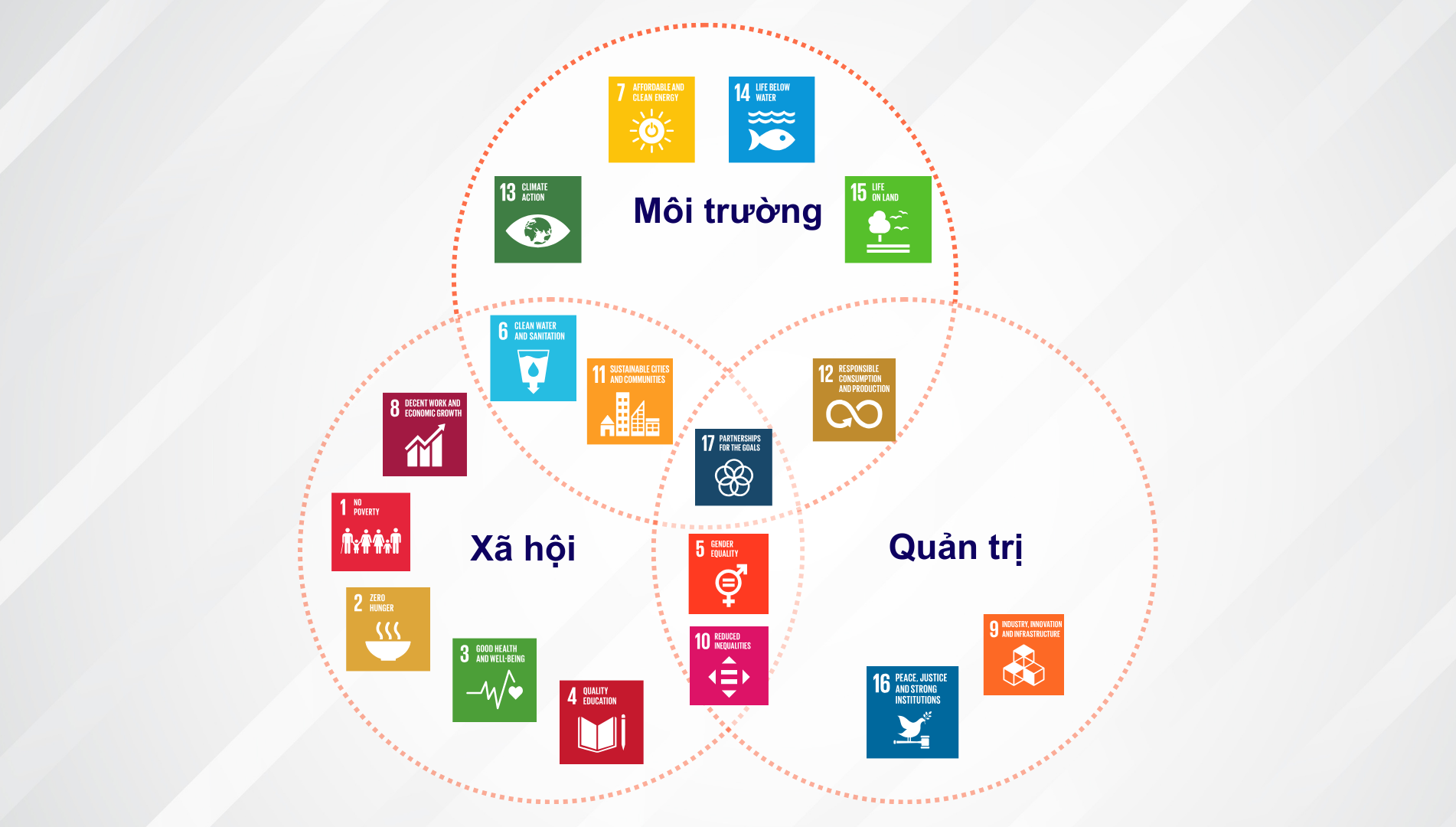
<p><strong>Executive Summary:</strong> The United Nations' 2030 Agenda for Sustainable Development, anchored by its 17 Sustainable Development Goals (SDGs), was conceived as a blueprint for global prosperity, equity, and environmental stewardship. For the corporate sector, the SDGs have evolved from a voluntary aspirational framework into a strategic lens through which investors, regulators, customers, and boards increasingly evaluate organisational purpose and performance. In India, the convergence of SEBI's Business Responsibility and Sustainability Reporting (BRSR) mandate, the growing sophistication of ESG-linked capital markets, and rising stakeholder expectations has created both a compelling imperative and a significant opportunity. Yet a troubling pattern persists: the majority of Indian enterprises continue to treat SDG alignment as a communications exercise—cataloguing contributions in annual reports without integrating the Goals into decision-making, capital allocation, or risk frameworks. This article offers a rigorous, actionable perspective for senior leaders who are ready to move from SDG optics to SDG outcomes.</p><h2>The SDG Opportunity: Understanding the Scale of Corporate Relevance</h2><p>The Business and Sustainable Development Commission estimated in its landmark 2017 report that achieving the SDGs could unlock at least <strong>USD 12 trillion</strong> in market opportunities annually by 2030 across food and agriculture, cities, energy, and health and well-being alone. In 2026, with the 2030 deadline now less than four years away, the urgency has intensified—and so has the scrutiny on corporate accountability.</p><p>For Indian enterprises, the relevance is particularly acute. India's development trajectory intersects directly with the SDG agenda: SDG 1 (No Poverty), SDG 3 (Good Health and Well-Being), SDG 6 (Clean Water and Sanitation), SDG 7 (Affordable and Clean Energy), SDG 8 (Decent Work and Economic Growth), and SDG 13 (Climate Action) all map to critical dimensions of India's economic and social landscape. Companies operating in manufacturing, infrastructure, financial services, healthcare, and consumer goods sectors are not merely bystanders to this agenda—they are, in many cases, the primary delivery mechanism.</p><p>The SDG Private Sector Financing Lab and UNCTAD's World Investment Report 2026 both reinforce a central thesis: <strong>private capital and corporate operational capacity are indispensable to SDG achievement</strong>. Governments alone cannot close the estimated USD 4.2 trillion annual SDG financing gap in developing economies. This repositions the corporate SDG conversation from philanthropy to infrastructure—from CSR budgets to business model innovation.</p><h2>Why Most SDG Reporting Falls Short: The Alignment Gap</h2><p>Despite growing volumes of SDG-related disclosure in annual and sustainability reports, independent assessments consistently reveal a significant gap between stated commitment and substantive integration. The Global Reporting Initiative (GRI) and the UN Global Compact's joint analysis of corporate SDG reporting identified three systemic weaknesses that are equally visible in the Indian context:</p><ul><li><strong>Cherry-picking without materiality:</strong> Companies frequently claim alignment with 10 or more SDGs without conducting a structured materiality assessment to identify which Goals are genuinely material to their business model, value chain, and stakeholder universe. The result is a diffuse, unactionable list that satisfies no serious stakeholder.</li><li><strong>Input reporting over outcome measurement:</strong> Disclosures tend to catalogue activities—training hours, CSR expenditure, renewable energy installations—rather than measuring the actual development outcomes these activities are intended to generate. SDG 4 (Quality Education) alignment, for instance, demands evidence of learning outcomes, not merely the number of scholarships disbursed.</li><li><strong>Decoupling from core business strategy:</strong> SDG commitments are frequently managed within CSR or sustainability teams with limited connectivity to business unit strategy, capital expenditure planning, procurement policy, or board-level risk oversight. This structural isolation ensures that SDG ambitions remain peripheral rather than transformative.</li></ul><p>Under SEBI's BRSR framework, which applies mandatorily to the top 1,000 listed companies by market capitalisation, disclosures across the nine principles of the National Guidelines on Responsible Business Conduct (NGRBC) provide a regulatory scaffold that implicitly maps to multiple SDGs. However, BRSR compliance and genuine SDG integration are not synonymous. Compliance produces a disclosure; integration produces a strategy. Indian boards and management teams must understand this distinction with clarity.</p><h2>A Framework for Strategic SDG Integration: The Four-Layer Model</h2><p>Praxis Consulting's advisory work with Indian and multinational enterprises has informed a structured four-layer model for moving from SDG reporting to SDG strategy. This model draws on the UN SDG Compass (developed jointly by GRI, UN Global Compact, and WBCSD), the GRI Universal Standards, the International Integrated Reporting Framework, and SEBI's BRSR guidance, while incorporating the operational realities of Indian enterprise contexts.</p><p><strong>Layer 1 — SDG Materiality Mapping:</strong> The foundation is a rigorous, evidence-based materiality assessment that identifies the subset of SDGs most relevant to the organisation's sector, geography, value chain, and stakeholder expectations. This is not a desktop exercise. It requires structured engagement with investors, customers, employees, community representatives, and regulators. The output is a prioritised SDG portfolio—typically three to five Goals—where the company has both significant impact and strategic leverage. For a large Indian cement manufacturer, this might yield SDG 9 (Industry, Innovation and Infrastructure), SDG 11 (Sustainable Cities and Communities), SDG 13 (Climate Action), and SDG 8 (Decent Work). For a mid-cap pharmaceutical company, the priority set would look markedly different.</p><p><strong>Layer 2 — Business Model Integration:</strong> Once material SDGs are identified, the next layer requires embedding SDG logic into the core business model. This means asking: how does our product or service portfolio contribute to or detract from SDG outcomes? What adjustments to our value proposition, supply chain design, or operating model would amplify positive contributions and mitigate negative impacts? This layer connects SDG ambition to revenue strategy, product development roadmaps, and procurement policy. Companies that execute this layer effectively often discover that SDG alignment and commercial opportunity are mutually reinforcing—clean energy transitions, inclusive financial products, and sustainable agriculture solutions are simultaneously SDG-aligned and commercially attractive in the Indian market.</p><p><strong>Layer 3 — Governance and Risk Integration:</strong> SDG commitments without governance accountability are aspirations, not strategies. This layer requires that material SDG priorities be reflected in board-level oversight structures, executive KPIs, and enterprise risk frameworks. The board's ESG or sustainability committee should have explicit responsibility for monitoring SDG performance against defined targets. Risk registers should be expanded to include SDG-related transition risks—regulatory tightening on carbon emissions (SDG 13), water scarcity exposure (SDG 6), and supply chain labour standards (SDG 8) are all material risk categories for Indian enterprises with significant operational or reputational exposure. The Ministry of Corporate Affairs' (MCA) framework for non-financial reporting and SEBI's evolving BRSR Core requirements are progressively reinforcing this expectation.</p><p><strong>Layer 4 — Measurement, Targets, and Disclosure:</strong> The final layer operationalises accountability through SMART targets, robust measurement systems, and transparent disclosure. Organisations should establish baseline metrics for each priority SDG, set time-bound targets aligned with the 2030 horizon, and implement data collection systems capable of generating reliable, auditable performance data. Disclosure should follow established frameworks—GRI Standards for impact reporting, BRSR for regulatory compliance, and the SDG Compass indicators for Goal-specific metrics. Increasingly, institutional investors and ESG rating agencies are demanding third-party assurance on sustainability disclosures, a trend that SEBI has begun to formalise through BRSR Core assurance requirements for the top 150 listed companies.</p><h2>The Capital Markets Dimension: SDGs and ESG-Linked Finance in India</h2><p>One of the most consequential developments accelerating corporate SDG engagement in India is the maturation of ESG-linked capital markets. The Securities and Exchange Board of India (SEBI) has progressively strengthened the regulatory architecture for green and sustainability-linked bonds, and the volume of ESG-labelled debt issuances by Indian corporates has grown substantially over the past three years. For CFOs and treasury teams, this creates a direct financial incentive to demonstrate credible SDG alignment.</p><p>Sustainability-Linked Bonds (SLBs) and Green Bonds tied to SDG-relevant Key Performance Indicators (KPIs)—such as renewable energy capacity additions (SDG 7), scope 1 and 2 emissions reductions (SDG 13), or water intensity improvements (SDG 6)—are increasingly accessible to investment-grade Indian issuers. The pricing advantage associated with credible ESG-linked instruments, while variable, represents a tangible cost-of-capital benefit that CFOs can present to boards as a financial argument for SDG integration.</p><p>Foreign institutional investors (FIIs) and development finance institutions (DFIs) such as the IFC, ADB, and AIIB are also applying SDG alignment screens to their Indian portfolio investments. For companies seeking to attract long-term institutional capital, demonstrable SDG integration is no longer a differentiator—it is increasingly a threshold criterion. This dynamic is particularly pronounced in sectors such as renewable energy, sustainable infrastructure, financial inclusion, and agri-tech, where the SDG narrative is both credible and commercially substantiated.</p><h2>From Ambition to Action: What Leading Indian Enterprises Are Doing Differently</h2><p>A discernible gap is emerging between Indian enterprises that are genuinely integrating SDGs into their strategic architecture and those that continue to treat the Goals as a reporting overlay. The distinguishing characteristics of leading organisations are instructive:</p><ul><li><strong>They have reduced their SDG portfolio to a manageable, material set</strong> and can articulate with precision why each selected Goal is strategically relevant to their business—not merely socially desirable.</li><li><strong>They have established SDG-linked executive accountability</strong>, with specific members of the C-suite owning defined SDG outcomes and reporting progress to the board on a quarterly basis, not merely annually in the sustainability report.</li><li><strong>They have integrated SDG considerations into capital allocation decisions</strong>, applying an SDG impact lens alongside financial return metrics when evaluating major investments, acquisitions, and product development initiatives.</li><li><strong>They are investing in data infrastructure</strong> to generate reliable, granular sustainability performance data that can withstand external assurance scrutiny—recognising that the era of self-reported, unverified ESG data is drawing to a close under both regulatory pressure and investor demand.</li><li><strong>They are engaging their supply chains</strong>, recognising that Scope 3 impacts and supply chain labour and environmental standards are increasingly material to their own SDG performance, particularly under BRSR's value chain disclosure expectations and the growing influence of global frameworks such as the EU Corporate Sustainability Due Diligence Directive (CSDDD), which affects Indian suppliers to European companies.</li></ul><p>The 2030 deadline for the SDGs is not an abstraction. For Indian enterprises with five-year strategic planning cycles, it falls squarely within the current planning horizon. The organisations that begin substantive SDG integration today will be positioned to demonstrate credible, measurable progress by 2030—a capability that will matter to investors, regulators, customers, and the communities in which they operate. Those that continue to treat the SDGs as a reporting exercise will find themselves increasingly exposed as the sophistication of stakeholder scrutiny continues to rise.</p><p>Praxis Consulting's Sustainability and ESG Advisory practice works with Indian and global enterprises to design and implement SDG integration strategies that are rigorous, commercially grounded, and aligned with the full spectrum of applicable regulatory and reporting requirements. If your organisation is ready to move from SDG aspiration to SDG accountability, we invite you to connect with our advisory team for a structured diagnostic conversation.</p>
Actionable Recommendations
Conduct a structured SDG materiality assessment engaging key internal and external stakeholders to identify the three to five Goals most relevant to your sector, value chain, and business model—and formally retire claims of alignment with Goals where your impact is negligible or unsubstantiated.
Embed SDG-linked KPIs into executive performance scorecards and board-level ESG oversight responsibilities, ensuring that sustainability commitments are governed with the same rigour applied to financial and operational performance targets.
Align your BRSR disclosure architecture with your prioritised SDG portfolio, mapping NGRBC principle-level disclosures to specific SDG targets and indicators to create an integrated, coherent narrative for investors, regulators, and rating agencies.
Engage your Tier 1 and Tier 2 suppliers on SDG-relevant standards—particularly those pertaining to labour practices (SDG 8), environmental management (SDG 13, SDG 6), and ethical conduct (SDG 16)—to ensure that your value chain exposure does not undermine the credibility of your own SDG commitments, especially in light of growing EU supply chain due diligence requirements affecting Indian exporters.

Founder & Principal Consultant at Praxis Consulting with 30+ years of expertise in GRC, Enterprise Risk Management, and International Management Standards. A published author of Mastering ISO 17025, School Safety Blueprint, and ISO 19011:2026 — Auditing Excellence, he has trained over 5,000 professionals worldwide.